Monday, 11 November 2013

Realistic Fiction Writing


Realistic Fiction Writing

Over the past few weeks the children have been using what they learned during our PERSONAL NARRATIVE writing unit to help them develop a more complex style of writing - Realistic Fiction.  

Modeling engaging fiction stories are crucial.  We read a short chapter book called Oggie Cooder by Sarah Weeks.  The story had good character development and story problems.  We analyzed this book closely while enjoying the story together.  

The next task was to use what we learned from listening to the book and using specific writing crafts in our own stories.  Children were taught a variety of ways to plan their story.  The most useful, I believe, is planning by story mountain.  Please ask your child about this method.


Some students working together using the story mountain strategy to plot a story we read together.

By analyzing short stories and how the problem in the story increasingly became more intense guides children when they plan their individual story ideas.


Below are the teaching points I wanted to teach the children about writing realistic fiction:

Ways to find ideas for realistic fiction.

Ways to plan a story with a problem and solution.

Ways to craft an effective lead and effective ending.

Ways to add detail including:

Specific character actions
Showing not telling
Information about setting
Interesting words and strong verbs
Using bit-by-bit storytelling to stretch scenes across a page
Exploding a moment

Balancing character thoughts, talking, actions, feelings, and description.

Showing that the character changed or learned something.

We will record our stories on the blog next week.  I will let you know when they are ready to read.  

Tuesday, 29 October 2013

Dear Parents,

Your children continue to work hard in class everyday.  I have been pleased with their efforts and progress.

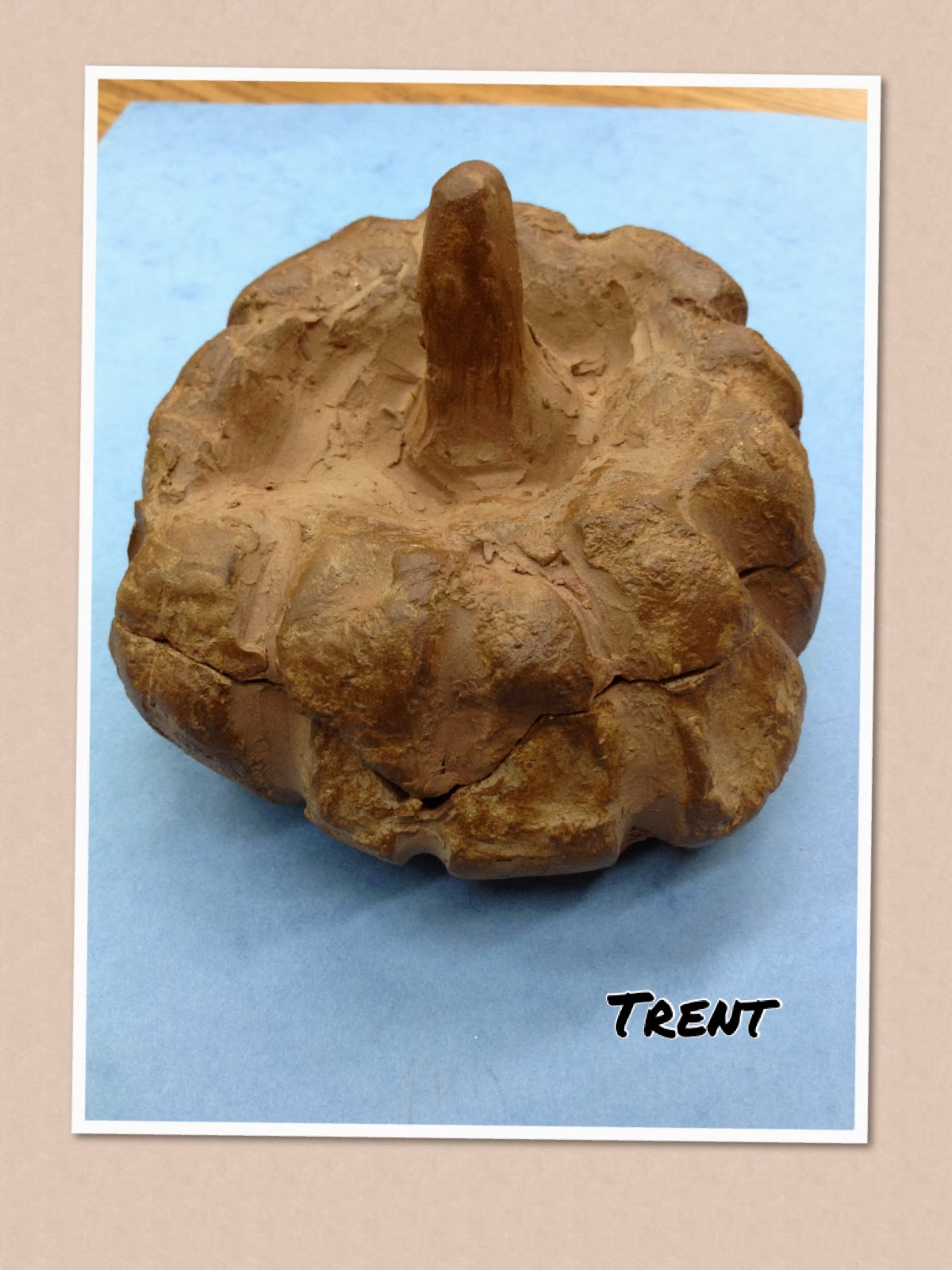
Last week we set ourselves a challenge to make some clay pumpkins in preparation for Halloween this coming Thursday.  The task was not easy and quite complicated.  I want to thank the mom's who came and helped the children along.  Some challenges threw their way at us but we persisted and completed our work.

Please enjoy your children's clay pumpkins below.  Each are different and unique.  I like them all!


Monday, 30 September 2013

Sunday, 29 September 2013

Lateral Thinking

Lateral Thinking Skills
 
 
I try and teach the children that all problems have a solution.  Some problems are yet to find a solution but one is just around the corner...
 
Each morning I will ask the class a question that requires looking at a problem or story in a different way.  Often the question is a play on words or will need a creative mind to solve it. 
 
Please enjoy some of these questions that I have asked the class so far this year.  Don't worry if you can't solve the question!  Just ask your child - they SHOULD know the answer.
 
Some months have 31 days, some have 30 days but how many months have 28 days?
 
There were 2 sons and 2 dads.  They all went fishing by a huge lake full of fish.  They each caught 1 fish but there were only 3 fish caught.  How was this possible? 

 
Suppose you want to cook an egg for exactly 3 minutes. You have only a 5 minute hourglass timer and a 2 minute hourglass timer. Using these 2 timers, how can you boil the egg for exactly 3 minutes?
 
 A man was found dead in a field of snow and beside him was an unopened package.  There were no footprints found anywhere near his body.  How do you think the man died?
 
Romeo and Juliet were found dead on the living room floor. When they were discovered there was broken glass and water on the floor. There was no one else found in the house besides the pet cat. What caused the death of Romeo and Juliet?

 
A boy was at a carnival and went to a booth where a man said to the boy, "If I write your exact weight on this piece of paper then you have to give me $50, but if I cannot, I will pay you $50." The boy looked around and saw no scale so he agrees, thinking no matter what he writes he'll just say he weighs more or less. In the end the boy ended up paying the man $50. How did the man win the bet?
 
There is a barrel, weighing 20 pounds. Susie came and put something in the barrel, making the barrel lighter. The barrel now weighs 15 pounds.  What did Susie put in the barrel?


A woman shoots her husband. Then she holds him under water for over 5 minutes. Finally, she hangs him. But 5 minutes later they both go out together and enjoy a wonderful dinner together. How can this be?
 
Stay tuned for more to come...


September 30th

Dear Parents,

The children have begun writing REALISTIC FICTION stories during their writing lessons.  Gathering ideas has been a big focus.  Many of the same writing skills I taught during our PERSONAL NARRATIVE unit must be used by the children during this unit. 

During this week I will choose engaging books to read to the children that will demonstrate good Relistic Fiction.  The book that I am reading to the children now is titled, THE KID IN THE RED JACKET. 

In math unit 2 concluded last Thursday.  I am in the process of grading each child's test.  You will see their score soon.  In the meantime we move forward with SUBTRACTION. 

This Friday (October 4th), our class will have a group and individual photos.

Kind regards,

Marcus


Thursday, 19 September 2013

Personal Narratives

Personal Narratives
 
 
Your children have been working hard on writing stories about memories they have had.  We call these stories PERSONAL NARRATIVES. 
 
Often children scratch their head and struggle to find something to write about.  Writing about something you have done becomes a little easier as you just have to rewind your memory bank and choose something you might think someone else will enjoy reading.
 
Generating a list of IDEAS:
 
PERSON - I asked the children to think of someone that is special in their life and then list fun, sad, scary, exciting times they had had with that person. 
 
 
PLACE - I asked the children to think of a place that is special to them like their home, bedroom, park, beach, playground, etc.  They then list things they have done in these places.  These memories can SPARK a story.
 
 
THING - I also asked the children to think of a thing that has special meaning to them.  They then list special times they have had with that thing.  Again this could spark a great story. 
 
The children use these IDEAS to write their personal narrative.  The BIG teaching point was to focus on writing about a small moment compared to writing about too many things.
 
We used the analogy of a WATERMELON - (a writing topic that covers too many things) and a SEED (focusing on a small moment).
 
Watermelon Topic = My family
Seed Topic = The time my sister and I had a pillow fight
 
Once the children choose a small moment story they then PLAN their beginning, middle and ending.  I reminded the children that the middle part is where most of the ACTION should take place.  This is where the writer SLOWS down their writing and includes more detailed description. 
 
After practicing many personal narrative stories I had the children choose their favorite and publish it, by writing it out neatly and adding illustrations. 
 
On Wednesday we all finished our stories so we had a publishing party in class.  Simple IDEA - We drank hot chocolate, ate marshmellows and read each others stories.  Each student wrote a thoughtful comment about their peer's writing. 
 
Below please enjoy some pictures of the 'party'.  I have also taken some pictures of our process.
 
  We plan on recording each student's story where you can listen and enjoy them.  These recordings will take place next week.  I will email and inform you when they have all been uploaded.
 
In deep thought.


A dratf story that is begin revised.


Sometimes when you hear your story outloud you notice parts that need to change.


The girls discussing each other's writing.


Writers reviewing.


Analysing


Rereading is the key to a clear story.


Hard at work.


What comes next?


Writing a nice comment for a classmate's story.


Just checking everything sounds clear.


Mmmmm, back to the story.


Reading a classmate's personal narrative.


Monday, 9 September 2013

Science

Science in the Sun
Our first science unit in Grade 3 is focusing on the SUN.  Some of the standards that we want children to understand are:
* Students will know the position of the Sun in the sky changes during the course of the day and from season to season.
* Students know sunlight can be blocked to create shadows.
* Predict the outcome of a simple investigation and compare the result with the prediction. 
We took compasses outside and found the directions of North, South, East, and West.


We pointed to where the Sun was during 2:00 pm.  We also pointed where the Sun was early in the morning at 9:15 am.  We discussed what was happening.


We traced our shadows early in the morning.  We predicted in which direction our shadow will be at 9:15 in the morning.  We all faced South and found out that at 9:15 in the morning our shadows will be in the West. We discussed why.

If you have time please ask your children what they know about where the Sun rises, sets and most importantly, what makes this happen.
The children will be given a short test on many of these areas to see if they have understood the concepts.  You will be receiving their test to have a look at soon. 
Some key concepts:

* The Earth spins on its axis

* The Sun rises in the east and sets in the west every day.

* A compass is a tool used to determine directions.

* Shadows are the areas of darkness created when light is blocked by an object.

* The shapes of shadows change over a day and depend on the position of the Sun in the sky.

* Day happens when a location of Earth is facing the Sun.

* Night happens when a location on Earth is facing away from the Sun.

* The exact path the Sun takes in the sky varies by season.  In summer the Sun is higher in the sky.  In winter the Sun is lower in the sky.